My new CINEMATIC REVELATIONS podcast is now available on ElectraCast, click on the image to be taken to its entry on the Society 13 Network:
You can also listen to CINEMATIC REVELATIONS on Apple Podcasts, Spotify, Megaphone, You Tube, Stitcher, IHeart, and Amazon. Just click on the logos to land on the specific podcast page:
You can now listen to CINEMATIC REVELATIONS, and hear my reviews of movies at home, on the go...wherever you wish. Please enjoy my podcast, I'd love to know what you think.
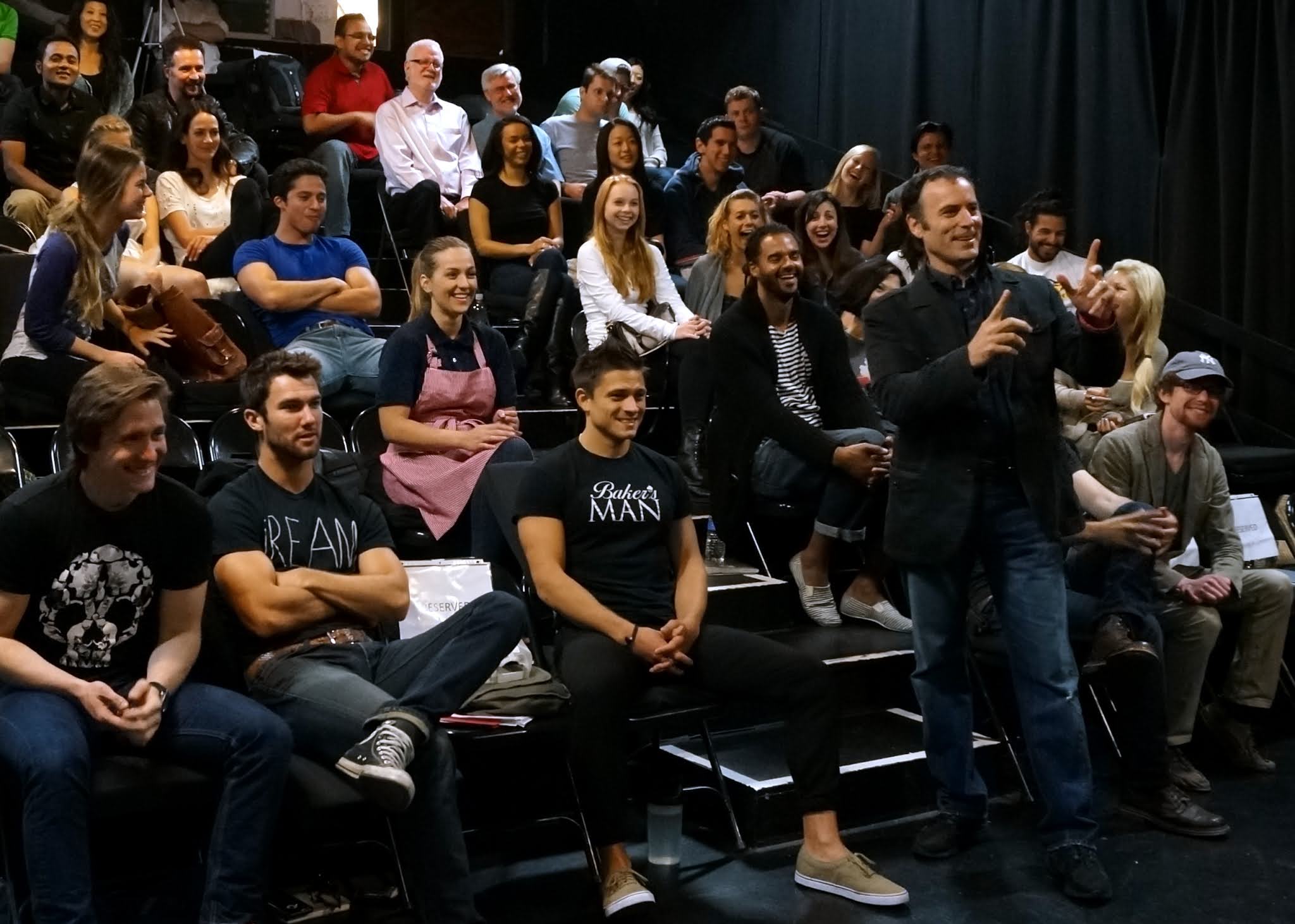
Today I have the great pleasure of
welcoming a very special guest, actor DW Brown, to CINEMATIC REVELATIONS for an
interview. DW has acted in various motion pictures over the years, most notably
in feature films such as FAST TIMES AT RIDGEMONT HIGH, I’M GOING TO BE FAMOUS,
MISCHIEF [my review of the film can be found here] WEEKEND PASS, and AMERICAN COWSLIP, to name a few examples. DW will be discussing his role in MISCHIEF, acting, his films as director, and his
teaching position in Baron Brown Studio, an acting school for performers. Welcome to CINEMATIC REVELATIONS DW!
Athan: When did you first realize that
you wanted to be an actor?
DW: Oh, I was but a wee lad. I played
Aladdin in Aladdin and His Lamp in Tucson Arizona and caught the bug. It’s completely impractical, of course,
so I was studying to be a doctor, like my father, but then I had an epiphany
about how this was my one and only life, and I thought about which path I would
be more likely to regret or not, so I decided to go for my first love.
*
Athan: Where did you study acting?
DW: I studied with Lee Strasberg and
some of his teachers. I did a lot of plays, which I think is the best way to
get your acting chops. I got involved romantically with Joanne Baron... we just
celebrated recently 35 years of marriage by the way... after we met
acting together on a silly movie called “ The National
Lampoon’s The Joy of Sex”. After that she taught me in a class she
was teaching. She was already at her tender age famous for being one of the
world's greatest Meisner teachers.
*
Athan: Your performance in MISCHIEF was
a memorable interpretation of a complex villain with definite
shades of gray. How did you become involved in this project?
DW: Standard simple stuff. I auditioned
and I was in the running for what seemed like a long time, and then they told
me I had the part.
*
Athan: Yourself and Chris Nash, and
alternately with Doug McKeon, participated in some heated scenes in MISCHIEF.
How did you find filming these intense, often physically challenging sequences?
DW: That fight scene at the drive-up
restaurant was very challenging. I’ve pulled my back out bad maybe only four
times in my life, and it had happened less than a week before we shot that
scene. There’s a moment where he shoves me against the door handle of the car,
and by the way those old time cars, they didn’t have recessed door handles, so
it was like “Yowza!” I think the physicality came off pretty well, though.
Pretty realistic. It bothers me a little that the only part of the scene where
a stunt guy doubled for me was when my character was punching Chris’s character
in the stomach, and that’s the only part that looks phony.
*
Athan: What did you most enjoy about
the experience of filming MISCHIEF?
DW: The overall adventure of making a
film on location is pretty great. Sometimes you can get stir crazy living in a
hotel room for over a month. I remember understanding how it was rock stars
might tear apart a hotel room. But mostly it’s tremendous fun.
*
Athan: What for you was the most
demanding, but emotionally satisfying segment of making MISCHIEF?
DW: You asked about scenes being heated
earlier: I will always remember that scene at the drive-in movie theater. When
they called for me to come to the set, I was walking down where all the period cars
were and all the extras in their costumes, everybody waiting for me to do my
scene and I started to get extreme stage fright. Really bad. Like rubbery knees bad. But
then I thought, “Wait a minute. Eugene is going to be there. I hate this guy.
Even if he’s off camera and it’s my close up, he’s making a move on my
girlfriend and if I just keep my attention on him, I’ll do whatever he makes me
do and it’s going to be fine.” My nerves feel away immediately.
*
Athan: MISCHIEF had excellent attention
to period detail in terms of costuming, scoring, production design, and
locations. What was it like seeing the transformation of a modern-day town in
the mid-1980s to one in Nelsonville, Ohio, of 1956?
DW: Very cool. It just really typifies the
lark that acting is. Entering this fantasy world and having permission to play
pretend.
*
Athan: Have you kept in contact with
any cast members and crew from MISCHIEF?
DW: Not consistently. I’m on Facebook
with Catherine Mary Stewart. I ran into Kelly Preston a couple
times. What a heartbreak that is. When I heard the news of her passing it
knocked my breath away.. that I would never be in her spirited presence
again... so crushing. She really was a great gal.
*
Athan: What was it like being directed
by Mel Damski in MISCHIEF?
DW: Mel was very solid. You knew there
was a steady guy at the helm. He’s got a good sense of humor, too,
which is essential.
*
Athan: After acting in MISCHIEF, did
you have an increased interest in the cultural history of 1950s America?
DW: I love history, but I can’t really
say, that specifically happened to me. The truth is I spent some time in the
little town where my dad came from, Columbus, Indiana, so I had my familiarity
with that little town and it didn’t seem like things had really changed that
much.
*
Athan: Together with your wife, actress
Joanne Baron, you have been teaching acting at the Baron Brown Studio to
students for many years. What gives you the most satisfaction about teaching
the art of acting to students?
DW: Oh Lord, that would really require
a deep and long answer to do it justice. I’ll just say, being exposed to the
spirit of youth is great. And then, on top of that, the passion people bring to
this undertaking. Their vulnerability. The art itself, like all the arts, is
miraculous.
*
Athan: The Meisner technique is the
basis for your teachings at Baron Brown Studio. What is it about the Meisner
technique that sets it apart from other acting methods?
DW: Like all techniques, it’s an effort
to look natural and authentic, and to be an internal actor, doing the work
based on Stanislowski‘s work, is to emotionally connect to the circumstances of
the scene. But with Meisner acting, there is more emphasis on truly
seeking an objective in a scene with the sensibility that you’re not sure
whether you’ll get it or not. It is to be as closely connected as possible to
the specificity of the moment and allow yourself to be available to be affected
by that. Living like an animal lives. Mindless. Responsive.
*
Athan: You have written two books about
acting thus far. What is it about acting that you find so fascinating?
DW: As I said, it’s art, it’s a
miracle. Think about it: any short list of the most important human beings who
have ever lived would include Shakespeare. There’s something there and it’s so
great we can’t describe it.
*
Athan: Short film ONE CLEAN MOVE marked
your debut as a director, followed by another short, CHLOE and, most recently,
full-length feature film ON THE INSIDE. What is the attraction in making short
films versus longer motion pictures?
DW: Oh, you only really make short
films because you can’t make long films. It’s incredibly hard. So many moving
parts.
*
Athan: Do you have any upcoming
projects of which you would like to tell readers?
DW: Nothing on the immediate horizon. Of
course, the pandemic knocked the legs out from underneath show business, so
everybody’s staggering unsteadily to get things back to anywhere close to what
they were like. I have an adaptation of a Ibsen play I wrote that I
would very much like to put up, but, again, with the pandemic, theater is
pretty much impossible right now.
*
Thank you so much today for your time
DW, and for the insight you have provided into the art of acting, the Meisner
technique, film direction, and MISCHIEF. It has been wonderful to have you on
CINEMATIC REVELATIONS. You are welcome to return whenever you wish.
DW: Thank you, Athan, and you’re quite
welcome. Keep at it!
Synopsis: A young man from a wealthy family decides to buy a derelict building, wishing to renovate it to live in as a new home, but the tenants have other ideas, changing his views on life, and love.
Within a film history context: Movies with a landlord protagonist have been fitfully featured in film history. One of the most famous to feature a landlord central character was Alfred Hitchcock's silent film THE LODGER (1927). In this movie, a landlady to a handsome man has suspicions that he may be a psychopathic killer murdering young women in London. With MURDER AT THE INN (1934), directed by George King, a young couple become implicated in the murder of a landlord. More comical in execution was Lew Landers' LIVING ON LOVE (1937). In this film, the landlord is of a friendlier disposition than other examples, assisting two young people, a man and a woman, to share an apartment, with many complications ensuing. Matters again were of a comic nature in SING FOR YOUR SUPPER (1941), directed by Charles Barton. In this movie, a young woman who is a landlord becomes a nightclub singer in disguise, which causes trouble between her and her beau. In a similar comic vein was Sam Newfield's FIGHT THAT GHOST (1946). Here, the landlord has more of a supporting role than other movies, as two people attempt to short-change him of rent money, with many amusing consequences. Further films explored the landlord theme, with interesting results.
Mexican film HIDDEN RIVER (1948), directed by Emilio Fernandez, had an unscrupulous, dictatorial landlord of the town making his evil presence felt by all. Equally sinister was J. Lee Thompson's MURDER WITHOUT CRIME (1950). The landlord is this was also of a mean persuasion, using blackmail to make a man guilty for an accidental death. BROADWAY JUNGLE (1955), directed by Phil Tucker, was about a man pressured by his landlord for the rent, explaining that he was working on a film project, and would have his payments up to date soon. Into the 1960s came two films that approached the landlord theme in a humorous manner. Richard Quine's THE NOTORIOUS LANDLADY (1962) added a mystery angle to its largely droll mood, with Kim Novak as a landlord believed to have committed murder, and Jack Lemmon as the man who falls for her in London. Matters were more romantic in UNDER THE YUM YUM TREE (1963), directed by David Swift. Again starring Jack Lemmon, but this time as the landlord, in love with his tenant, and doing his best to make her love him, and leave her fiancé. THE LANDLORD shared elements of the more jocular and dramatic films within its structure, but also, contained its own bold strokes.
THE LANDLORD, was, at heart, a comedic film with many dramatic elements, much deeper than the other films previously mentioned. The comedy, though, is never far-fetched or antic based, but reflects upon the characters, making their emotions palpable to the audience. Even in the most dramatic moments, the viewer can feel for the characters and what they are going through. In saying this, THE LANDLORD is a sympathetic treatise, to name a few examples, in understanding, race relations, interracial relationships, finding one's self of self, and place in the world. Unlike the other movies, in which the landlord was a peripheral or supporting player, in THE LANDLORD, the lead character from whom the action originates was the landlord himself. The people with whom the landlord comes into contact reveal intimate sides of themselves that make them real, and, in turn, sides of himself emerge that may not have been evident at first glance. The narrative events are more complex in nature than the other movies, with many unexpected incidents occurring that take the viewer by total surprise. A film that is balanced in every respect, with the ability to amuse, shock, and move at different turns, THE LANDLORD is an original, and successful triumph in filmmaking.
Overview: Hal Ashby was a director who made films that on the surface only seem full of incident and sass, many times ludicrous in nature. When examined more carefully, though, these films reveal facets of humanity and events that are thoroughly compelling. From 1970 until 1986, several years before his death in 1989, he directed eleven feature films. Mr Ashby's second film, HAROLD AND MAUDE (1971), was a trend-setting black comedy about the unlikely romance between a woman in her seventies, and a young man in his twenties. Next came THE LAST DETAIL (1974), starring Jack Nicholson and Randy Quaid as a sailor escorting a young sailor on a wild odyssey before he ends up in jail. Filled with coarse language, ribald behaviour but also, a pathos that puts all the hijinks in an understandable perspective, it was possibly Mr Ashby's most touching, tragic, true to life movie. Coming next was the box-office bonanza SHAMPOO (1975). Featuring an all-star cast with Warren Beatty as a womanizing hairdresser in Beverly Hills, variously coupling with Julie Christie, Lee Grant, Goldie Hawn, and Carrie Fisher, it was another film that had an outrageous premise on paper, given depth by Mr Ashby and his illustrious cast. Moving on from these films, Mr Ashby produced more films that continued his cinematic tradition of combining dramatic and comedic content with style.
BOUND FOR GLORY (1976) was a change of pace for Mr Ashby, this time taking on the real-life story of folk singer Woody Guthrie, with positive critical results. Later in the decade, Mr Ashby had another artistic and commercial triumph with COMING HOME (1978). With Jane Fonda in the starring role of a woman falling for a man injured in Vietnam, her husband away in Vietnam, it was nominated for major awards, winning Oscars for Miss Fonda and Jon Voight as the man who wins her heart. One of Mr Ashby's final films of note was 1979's BEING THERE. An all-star cast including veteran Melvyn Douglas, Peter Sellers and Shirley MacLaine, it told the story of a man involved in politics who teams with a gardener, their friendship blossoming. It was similar to Mr Ashby's other films in detailing relationships which seem improbable at first glance, but through which something special eventuates. The remainder of Mr Ashby's output was not as prominent as his 1970s films, variously tackling comedy subjects, SECOND-HAND HEARTS (1980), LOOKIN' TO GET OUT (1982), THE SLUGGER'S WIFE (1985), and action-drama in 8 MILLION WAYS TO DIE (1986). THE LANDLORD was Mr Ashby's directorial debut, and is one of his best motion pictures.
The story of race relations, and how a white landlord purchases a dilapidated apartment block for his own purposes, is given a joie de vivre and sense of irreverence by Mr Ashby in THE LANDLORD. Hypothetically speaking, in other hands the film may have been one where either the comedy, or dramatic elements would have been laid on too thick, but in THE LANDLORD everything is just right. Trying to work out how the director has succeeded in making the film so effectively, and affecting, is a puzzle, but it is best to enjoy the experience, and not think about it too much. The disparate elements could have rendered it as lopsided or a mishmash, but here things work in an indescribably enjoyable way. This is a feature of many of Hal Ashby's movies, whereby events and characters may seem over the top on initial impression, but as his films unreel, another layer to people and events makes itself felt. The freewheeling handling of THE LANDLORD is reminiscent of a late 1960s film, ALICE'S RESTAURANT. While that film was quite enjoyable in its choppy, disjointed manner, it does not have the depth, or emotional resonance, of THE LANDLORD. In summing up the film, it is safe to say that THE LANDLORD is one of Hal Ashby's best films, and a memorable, perceptive examination of race relations.
Acting: The acting in THE LANDLORD is of a very high caliber, lifting the material, and making it into something exceptional. In the lead role of Elgar, the ambitious young man who purchases the run-down apartment block, Beau Bridges delivers a natural, charismatic performance. He is always a performer with a likable disposition in all his films, and it is no exception in this movie. As Elgar's mother Joyce, Lee Grant displays her versatility at playing what appears, at first, to be a dizzy socialite, but Miss Grant reveals layers of comedy and pathos which is her trademark. Miss Grant's line deliveries are always pithy and entertaining, adding allure to the film. Susan Anspach shines as Susan, Elgar's sister, displaying a zaniness not always captured on film. An actress who excelled in dramatic pieces such as her role in FIVE EASY PIECES, here her ditziness is contagious, and works very well. Apart from these actors, three other performers add great contributions to THE LANDLORD which deserve evaluation.
As Marge, the oldest tenant in the apartment block, Pearl Bailey is imperious but sympathetic, a woman of much depth. Her scenes with Elgar, and, above all, Joyce, bring out something different but special in all the actors. Diana Sands, as the passionate, earthy Fanny, was one of the best African-American film actors ever. An actress who passed away too soon, depriving the cinema of more edgy, excellent portrayals, her work here as a woman wanting to stay with her charismatic but troubled husband, but attracted to the good-looking, charming Elgar, has definite punch, and a sad subtext. As Copee, Fanny's husband, Louis Gossett Jr. brings a danger and excitement to THE LANDLORD. From his first appearance on screen with a bow and arrow, Mr Gossett knows how to push the buttons not only of the other characters but also, those of the audience, featuring in some of the film's most scary but also, saddest moments.
Soundtrack: THE LANDLORD is not overloaded with music within its running time, in common with many other 1970s films, which lends it a balance that serves it well. THE LANDLORD's soundtrack is peppered with many tunes by African-American artists which give the film an inimitable spice and life, particularly during the opening credits. Other sequences such as the chase scene with Elgar, holding a large pot, feature funky music which greatly embellishes the comic nature of what is taking place. One of the most vivid uses of diegetic music is in the dance nightclub where Lanie performs. Coupling the blaring music with Lanie dancing above the crowd, and dark lighting creates a effervescent, yet intimate atmosphere.
Mise-en-scene: THE LANDLORD has a very interesting, vivid use of locations and sets. On the one hand, there is Elgar's run-down apartment block where the majority of the action takes place. The sense of decay is evident in the shabby nature of the building, with its dark, small rooms, gothic foyer, and in the outdoor scenes with unkempt streets and litter. This can be contrasted with Elgar's family home, with elegant rooms, a clean, spacious atmosphere, and well-manicured gardens. The film clearly draws distinctions between the 'haves' and the 'have-nots' in this respect for the audience to consider.
Award-worthy performances in my opinion: Beau Bridges, Lee Grant, Susan Anspach, Diana Sands, Pearl Bailey, Louis Gossett Jr.
Suitability for young viewers: No. Low-level coarse language, adult themes, low-level violence.
Synopsis: A lawyer in 1930s Alabama takes on the case of a black man accused of raping a white woman.
Within a film history context: Movies which have a lawyer protagonist have been present in cinema for many years since the silent screen. One of the first documented films was Allan Dwan's THE COUNTY CHAIRMAN (1914). In this, a tug of war between two men occurs, one of them being a lawyer, with past incidents such as business and romantic rivalries rearing their head. More domestic in its outlook was ALWAYS IN THE WAY (1915). Starring Mary Miles Minter, it was concerned with a young girl neglected by her father, a lawyer, who remarries after the death of his wife, the stepmother viewing the stepdaughter as an unnecessary obstacle. Frank Lloyd's A TALE OF TWO CITIES (1917) set in 1790s France, showed how a lawyer saved an aristocrat, who, incidentally, was married to his great love. In a similar vein to ALWAYS IN THE WAY, HOUSE OF CARDS (1917), directed by Alice Guy, revolved around a young protagonist. A young girl is feeling abandoned emotionally by her parents, her father being a lawyer, and runs away with a young man. Moralistic in nature was Harry Revier's THE GRAIN OF DUST (1918). Here an innocent young woman is loved by a young lawyer who schemes to get closer to her, but his machinations cause her torment. As with the 1910s, the 1920s silent era was also a time of varied depictions of lawyers in cinema. CAUSE FOR DIVORCE (1923), directed by Hugh Dierker, was about romantic entanglements in a family. The daughter of a man, married to a lawyer, falls for a smooth man who is up to no good. Somewhat more comic in its intentions was Robert Leonard's CHEAPER TO MARRY (1925). This film focused on two lawyers in a firm, and how one partner tries to convince the other to stay away from his mistress so that he can have her instead. A darker view of lawyers could be found in SUPER SPEED (1925), directed by Albert Rogell. This time around, the lawyer is trying to take advantage of someone else's invention, but, the protagonist will not allow him to do so. Inventive in its naughtiness was E. Mason Hooper's GETTING GERTIE'S GARTER (1927). Again, the indiscretions of a lawyer's private life are in view, with a garter causing untold anguish for him, with comic results. Signs of the changing times were explored in DON'T MARRY (1928), a comedy helmed by James Tinling. In this film, a liberated flapper has her eye on a young lawyer, who has antiquated views of women, and disguises herself as another woman, with the intention of making him realize modern women are better than Victorian women. As evidenced by the above films, the majority were comic in nature, but still said much to audiences of the time. The 1930s featured a plethora of lawyer-themed films. D.W. Griffith's ABRAHAM LINCOLN (1930), was a biographical account of the American president, statesman and lawyer. THE NAUGHTY FLIRT (1930), directed by Edward F. Cline, was a comedy of a young woman who has a thing for a handsome lawyer. More dramatic was Frank Lloyd's THE RIGHT OF WAY (1931). Starring Conrad Nagel as an uppity lawyer whose life takes an unexpected turn, suspected of something he did not do, events conspire for him to face his trespasses and correct these. A more sympathetic view of lawyers can be found in THREE WHO LOVED (1931), directed by George Archainbaud. In this film, a committed young man studying to be a lawyer finds himself in both romantic, and legal trouble. More domestic in inclination was Clarence Brown's A FREE SOUL (1931). With Norma Shearer in the lead role, it focused on a lawyer whose daughter falls for his gambler client. Matters were of an entirely different nature in DRIFTING SOULS (1932), directed by Louis King. Here, a female lawyer provided the drama, with a young woman seeking to fund her father's medical operation, and becoming involved with an assortment of shady characters. Things were more heated in Richard Thorpe's CROSS-EXAMINATION (1932), with H.B. Warner as an attorney seeking the truth about a boy charged with patricide. 1932's LAWYER MAN, directed by William Dieterle, followed the private life of a lawyer, his professional career, and romantic escapades. Marital infidelity was given a workout in William Wyler's COUNCELLOR AT LAW (1933), with John Barrymore as a lawyer cuckolded by wife Doris Kenyon. This is just a small sample of the many films with lawyers in the lead role in the 1930s, a decade which seemed to feature innumerable lawyer protagonists. In the 1940s, many star vehicles, as in the other decades, were developed to showcase the lawyer theme for audiences. 1940's REMEMBER THE NIGHT, directed by Mitchell Leisen, starred Fred McMurray and Barbara Stanwyck in one of their teamings as a lawyer and his shoplifter client, and the love that develops between them. Nick Grinde's CONVICTED WOMAN (1940) had a female lawyer defending a woman against the charge of theft, with many unexpected twists and turns. TEXAS TERRORS (1940), directed by George Sherman, was slightly different from prior lawyer films. In this movie, which had a western theme, a lawyer seeks retaliation on the person who caused the death of his parents. Films about real-life lawyers appeared rarely on screen, with Frank Borzage's THE VANISHING VIRGINIAN (1942) the exception. This films followed the life of Robert Yancey, a Virginian district attorney, and was a change of pace for the genre. For A STRANGER IN TOWN (1943), directed by Roy Rowland, matters were of a different nature. With this film, an attorney battles corrupt people seeking to become mayor, but finding assistance from an unlikely source. D. Ross Lederman's DANGEROUS BUSINESS (1946) was a drama with comic asides. A male and a female lawyer create a partnership, and take on the case of a man who believes he has been framed for an act he did not commit. Things took a comical turn with CROSS MY HEART (1946), directed by John Berry. With Betty Hutton in the lead role, it was about a woman who tries to elevate her husband's business reputation with a lie - about a crime she had no part in. Alfred Hitchcock's more serious THE PARADINE CASE (1947) showed how a married lawyer falls for the woman he is defending, and the fallout in his marriage. One of the best examples of lawyer films arrived at the end of the decade. ADAM'S RIB (1949), directed by George Cukor, was a sprightly showcase for Spencer Tracy and Katharine Hepburn as married lawyers on opposite sides of the legal fence, displaying their rivalry in all arenas for the audience to understand. The 1950s began with a more serious portrayal of lawyers than in the 1940s, in keeping in line with post-war pessimism in cinema. Anthony Mann's SIDE STREET (1950) was about a young man who becomes involved with a untoward lawyer, leading to harmful repercussions for him. In a much more light-hearted vein, THE BIG HANGOVER (1950), directed by Norman Krasna, has a law graduate trying his best to conceal his weakness; a reaction to the smell of alcohol. An underhanded lawyer, something previous films had investigated, was the focus of Henry Levin's TWO OF A KIND (1951). In this production, a lawyer machinates with another man to lay stake to the fortune of a wealthy man. In an alternate vein, finding one's strength is the crux of THE PEOPLE AGAINST O'HARA (1951), helmed by John Sturges. With Spencer Tracy in the lead, it followed an attorney returning to the legal fold to defend his neighbour's son. More heart-stopping was Don Siegel's COUNT THE HOURS! (1953). Here a lawyer takes on the case of two married ranch workers accused of murder, but they are innocent of the crime. DOUBLE JEOPARDY (1955), directed by R.G. Springsteen, was more action-oriented in flavour, but still had its dramatic moments. In this instance, a lawyer defends his amour's father, who is accused of killing a man who was blackmailing him. One of the most famous films with a legal theme was Alfred Hitchcock's WITNESS FOR THE PROSECUTION (1957). A man accused of murder is defended by his British lawyer, with many of the typical comic, and dramatic touches that were symbolic of Mr Hitchcock's filmmaking style. One of the most profitable courtroom dramas was ANATOMY OF A MURDER (1959), directed by Otto Preminger. With James Stewart in the pivotal role of lawyer Paul Biegler, it was about his defense of a man accused of killing the man who raped his wife, but matters were not as simple as first thought in this film. TO KILL A MOCKINGBIRD, while concerned with a lawyer and both his business, and personal lives, had the intricate storylines of many of the above examples, but diverted from previous films in certain areas. TO KILL A MOCKINGBIRD, based upon the novel of the same name by Harper Lee, is a film that intimately depicts the family life of its protagonist, lawyer Atticus Finch, and the effect that his occupation has on his children, particularly his daughter Scout. Never before had a film taken the time to establish the lawyer lead character in such detail, likewise for his children, and the supporting characters who populate the movie. The film is balanced in the spotlight it shines on the adult characters, but also, on the younger characters. It is as if the viewer knows the characters, and what they are going through, in a thorough manner. It is easy for the spectator to feel an affinity for, and closeness to, the characters because of this. The movie was also notable for the number of elements and themes that it explores in an exhaustive fashion, such as family, loyalty, racism, ignorance, childhood games, and coming of age. It was equitable in this respect, with all of these ringing true, never being out of place. The film's piece de resistance, being the trial of a black man suspected of raping a white woman, is probably the most moving, incisive, tragic courtroom scene ever presented to audiences. Lacking the melodrama that can sometimes make courtroom scenes risible to viewers, it is as if a true event is unfolding in real time for the spectator, and this is largely emblematic of TO KILL A MOCKINGBIRD in its documentary-style approach.
Overview: Robert Mulligan was the director of twenty motion pictures over thirty-three years, with many years spent in television. His movies are stories with a sympathetic edge, making audiences comprehend what makes characters tick in an intensive manner. After spending several years working in television, Mr Mulligan made his directorial debut with FEAR STRIKES OUT (1957). The story of real-life baseball player Jimmy Piersall, it was notable for starring Anthony Perkins in his third movie role. After a few more years in television, Mr Mulligan made THE RAT RACE (1960). It was a comedy-drama with Tony Curtis and Debbie Reynolds as a musician who arrives in New York, and falls for a dancer. In a similar but more dramatic vein was one of his most famous pictures, LOVE WITH THE PROPER STRANGER (1963). Natalie Wood and Steve McQueen were, respectively, a department store assistant and a musician, with Miss Wood falling pregnant to Mr Queen's character. More great films followed in the years after for Mr Mulligan. BABY THE RAIN MUST FALL (1965) was a melodrama about a footloose man just out of jail, and trying to make it up to his wife and young daughter. Fine work from both Lee Remick and Steve McQueen as the lead actors, it was a memorable and moody piece of cinema, shot in stark black and white. Continuing with realistic stories and situations, 1967 marked the release of UP THE DOWN STAIRCASE. Featuring Sandy Dennis as a school teacher in a New York high school, it was hailed for its lead performance and its authenticity. Four years after this film, one of Mr Mulligan's most commercially successful movies was released, SUMMER OF '42 (1971). The sensitive recollections of a young man who falls in love with a married woman in the early 1940s, it is remembered for its performances, and the evocation of a time and place which Mr Mulligan delicately expressed on screen. Moving forward into the late 1970s, Mr Mulligan helmed BLOODBROTHERS (1978). A drama with Richard Gere as an Italian-American in the shadow of his older brother, attempting to carve his own niche in life, it was an actor's picture also starring Paul Sorvino and Tony Lo Bianco in major roles. Another distinctive film in his collection was SAME TIME, NEXT YEAR (1978). Taking CLOSE ENCOUNTER to a different level, it was about a married man and a married woman who embark on an affair, and meet at the same time every year when they first began their liaison. A touching observation of feelings and middle-aged angst, it provided great roles for Alan Alda and Ellen Burstyn as the couple in question. TO KILL A MOCKINGBIRD shared the sensibilities of Mr Mulligan's other films, whereby the viewer gains an intimate knowledge of the characters and their psychology, but added its own original touches. It is the well-crafted story of lawyer Atticus Finch, and his young family in the Alabama of the 1930s, and how Atticus takes on the case of a black man accused of raping a white woman. Mr Mulligan takes his time with establishing the story and the characters who inhabit its world, making the viewer feel for them, and know them on a deep level. We understand what makes Atticus and his children tick, likewise for the peripheral characters who appear within the film's running time. While this works to a large degree, the first half of the movie is a little slow in retrospect, with some scenes taking too much screen time that could have been eliminated or shortened, tightening the film as a whole. Possibly this was done to make the first half more of a starting point for the characters and their situations, but it does hurt the film's impact slightly. This is the film's only downside, as the remainder of the elements are executed in an excellent manner. The second part of the film, beginning with the court case, is where the pieces start to fall into place, and where it really finds its footing. It seems as if the first part was a warm up for the second half, but what a second half it is. The courtroom scene, working back and forth from lawyer to defendant, lawyer to witnesses, is breathtaking in its execution. The writing and acting meld together in such a cohesive, emotive manner in these sequences, that one forgets that they are watching a film, and it invites belief in the proceedings. Mr Mulligan is also to be credited for his balanced view of racial relations in the film. Both sides of the equation are presented to audiences to consider, without showing favour for one or the other in an impartial manner. The movie is one that elicits varied feelings in the spectator which would certainly lead to discussion of racial relations and identity. In looking at the film as a whole, though, and whatever its faults, it can be said that TO KILL A MOCKINGBIRD is a genuine and rewarding film experience that reflects well of its director, and his humanistic view of life.
Acting: The acting in TO KILL A MOCKINGBIRD is one of its strongest assets. In the lead role of Atticus Finch, Gregory Peck was in his finest hour in this film. A character of strength, determination, fearlessness, courage and empathy, Mr Peck is the glue that holds the film together, his presence assuring the film of its success. A handsome actor whose serious nature made him suitable for films with a deeper view of humanity, Mr Peck is in his element as Atticus. As his daughter Scout, Mary Badham was a revelation of a child actress. Going toe to toe with Mr Peck in all their scenes together, it is as if she was really his offspring, and they were also matched in terms of her being his conscience. Miss Badham is featured in some of the most moving scenes ever filmed by a child actress, so affecting is her acting that one forgets that she is acting; she is Scout. There are three other performers whose work in the film deserve recognition. Brock Peters, as Tom Robinson, the man accused of rape by Mayella Ewell, provides some of the most soul-stirring work in TO KILL A MOCKINGBIRD. Seeing Mr Peters on the witness stand, cracking under the pressure of an intense trial, is something that would wring tears out of even the most hardened of viewers. Mr Peters, quite simply put, is brilliant in these sequences. Also excellent in the film is Collin Wilcox Paxton as Mayella Ewell, the young woman who put Tom Robinson in this predicament. Miss Paxton does well as the impulsive, unjust, confused young woman, the viewer able to read her feelings from her face and body language. The final acting part of note is James Anderson as Bon Ewell, Mayella's rough, racist father. Playing a character with such villainous intent can sometimes make a part one-note, but Mr Anderson makes the character understandable, even if he can be thoroughly repellent at times.
Soundtrack: Elmer Bernstein's excellent instrumental soundtrack adds a thoughtful, solemn touch to the movie. Used appropriately in all respects, and especially during the quieter segments, it heightens the suspense when necessary, but, on the other hand, creates a warm, inspirational aura.
Mise-en-scene: The locations and sets in TO KILL A MOCKINGBIRD are exceptional, painting a vivid picture of life in the 1930s South for viewers. The film's sense of milieu is peerless, positioning the characters in this with realistic backdrops that are authentic to the eye. It is as if this small town really could have existed in real life, with sets such as the Finch family home the standout. The courtroom is also notable, providing a clear view of the actors and the proceedings for the audience in these pivotal scenes. Also deserving unreserved praise is the film's photography. Russell Harlan's cinematography is just perfect, especially the scenes set during the evening, with shadows and darkness adding a haunting atmosphere to the action. This is one of many post-1960s films in which black and white works exceedingly well to capture past times, and highlight serious content, such as HUD (1963) and THE LAST PICTURE SHOW (1971).
Award-worthy performances in my opinion: Gregory Peck, Mary Badham, Brock Peters, Collin Wilcox Paxton, James Anderson.
Suitability for young viewers: Parental discretion advised. Adult themes, low-level violence.
Synopsis: C.C. Ryder is a motorcycle mechanic who becomes a member of a biker gang, but falls for a fashion journalist, this complicating his relationship with them, especially, the gang's leader.
Within a film history context: Films about motorcycle biker gangs were at their height during the 1960s, but there were several examples of these on screen in the 1950s. The first major film about bikers, THE WILD ONE (1953), directed by Laslo Benedek, starred Marlon Brando in one of his signature roles. In this movie, two motorcycle gangs go head to head, and when one of their leaders is placed in jail, taking out their anger on a small town. Interesting to note that this was made by a major Hollywood studio, and seminal at the time for its view of events. Later films were made by smaller studios, with lesser known actors and directors. In Edward L. Cahn's MOTORCYCLE GANG (1956) a biker rails against being part of a more legitimate motorcycle club, his actions causing trouble with the other members. In a similar exploitation vein, DRAGSTRIP RIOT (1958), directed by David Bradley, a young man and his girlfriend are thought to have killed a biker from a gang, the gang's other members seeking revenge, but the crime was committed by someone else. The mid to late 1960s brought forth a plethora of biker gang themed movies for film audiences. Director Russ Meyer heralded a more violent brand of biker movie with MOTORPSYCHO! (1965). With this film, revenge was the order of the day, as a man whose wife was raped by bikers, and a woman whose husband was killed by the same bikers, unite to seek retaliation on this gang. In 1966, Roger Corman's THE WILD ANGELS was released. Starring Peter Fonda who would later appear as a biker in EASY RIDER (1969), it was about a San Pedro motorcycle gang causing trouble in California. Another notable entry was THE BORN LOSERS (1967). Both directed and starring Tom Laughlin, it followed a young man who takes on a motorcycle gang at their own game. It spawned four sequels over time, and was a major box-office success. Somewhat different in nature from previous films was Herschell Gordon Lewis' SHE-DEVILS ON WHEELS (1968). In this instance, a female motorcycle gang causes problems in a small town, par for the course for many films in the genre, and also, take on a male biker gang. With 1969 the most famous example of a biker movie exploded on screens, capturing huge audiences in its wake. EASY RIDER (1969), directed by Dennis Hopper, was about two bikers roaming the countryside on their motorcycles, but never finding real happiness along the way. While not part of a gang as such, it is of interest as the bikers were not out to cause problems, but found trouble from various individuals. This was in complete contrast to the previous entries where the bikers incited mayhem. The most poetic of all the biker movies, it is fondly remembered for its fashionable quirks and downbeat ending. C.C. & COMPANY both contained elements of the biker films, but also, had its own distinguishing characteristics. While C.C. & COMPANY featured a motorcycle gang, in this film the gang consisted of both men and women, unlike the other films which had either all-male, or all-female members. A man was the leader, as was the case with many of the previous films, who lorded it over the other members. In comparison to the other movies, it had a much lighter tone, preferring to keep away from the heady violence which marked films such as THE WILD ANGELS. While there were some scuffles and antics, these were of a decidedly softer, more benign nature. C.C. & COMPANY was concerned with the competition between members through racing and the like rather than thoroughgoing violence. The spectacle of motorcycle riding was the main ambition of this movie, teamed with a rock soundtrack, as with EASY RIDER. The film, though, had nowhere near the same depth or tragic pull as EASY RIDER, preferring to treat narrative events on a superficial level. This has both negative, and positive consequences for C.C. & COMPANY. One never finds out how, and why these people ended up in a motorcycle gang, as this is never revealed in the movie. Everyone has a story to tell, but, this has been neglected in the film. The assortment of wacky characters could have been teased out more, which would have added to viewing pleasure. Ann-Margret's character is the only one who seems to have a back story, but even this is not fleshed out. Other questions are also posed when watching the film. How does the gang make money? It may be through some illegal means, but this information is kept from the audience. It does not appear to be drug-based, as there are no references to, or scenes of substance abuse. What this points to is that C.C. & COMPANY has no aspirations to be deep in any way. It looks good as a movie, has great music and locations, and, has a ribald spirit that is contagious. It is a feel-good experience that seeks to take viewers on a rollicking journey of harmless entertainment that not does not require much thought, just an open mind.
Overview: Seymour Robbie was a director who made only two feature films in his career, but had a multitude of television credits to his name from the early 1950s, until 1990. His second film, MARCO (1973) was a family movie about Marco Polo, with action and musical trimmings, starring Dezi Arnaz Jr. in the lead role. Mr Robbie's debut movie, C.C. & COMPANY, was possibly the most entertaining, irreverent of his two movies. It follows the exploits of C.C. Ryder, the eponymous biker and mechanic who joins a biker group, but runs foul of them when he falls in love with a fashion journalist, taking his slice of the money with him. While this film is not high art, it obviously has not been intended to be such. It is pure escapism and entertainment, with plenty of motorcycle action scenes and comic interludes. These are the best parts of the movie, and what make it a watchable, fun experience. There are, though, certain features of the movie that are notable for dissection. While the male characters are well-drawn and have a definite purpose in the narrative, the same cannot be said about the female characters. As the film is in the biker genre, and some clichés are to be expected, or come with the territory, the female characters in C.C. & COMPANY are not in the same league as the male protagonists. They largely exist as either 'eye candy' for the male characters (and spectators), as biker molls or floozies, to use the term, and are only present to be saved by the male characters. They have, apart from Ann-Margret's role, no real purpose, and are actually more vulgar in their actions and language from the men, which is a surprising choice on the part of the writers and director. Maybe this was to show that women were sexually freer in both their choices and language than beforehand, but it does not leave a sweet taste in the mouth. Hardly a positive view of emancipated femininity. Other lapses exist in the film which are not satisfying for the movie as a whole. There is no clear tying up of loose ends at its conclusion which is a little frustrating. While it is obvious that the movie at the end is seen from C.C.'s perspective, riding off on his motorcycle, the fate of Moon is not explored in any way. This may have been intentional, but the lack of investment in this character, who dominates the screen whenever he is on, is a let down. Facile answers and solutions to problems are another feature of C.C. & COMPANY which could have been overturned, bringing more authenticity to the film. Something that was not investigated in any manner was exactly why was Moon the way he was, and how did he manage to round up the number of followers he did. William Smith is a charismatic performer and this is obvious in one way, but a little more depth in areas such as these would have been good. Apart from this, the movie did not capitalize on having William Smith and Ann-Margret onscreen together in more scenes. Having Moon, for instance, fall for Ann would have complicated matters, giving the C.C./Ann pairing more complexity. Alas, this was not to bear. This lack of attention to some details, though, points to the intention of the movie, which cannot be faulted. Whatever its deficiencies, C.C. & COMPANY is a movie that exists to entertain with its thrills and spills, in a mindless, carefree manner, and successfully achieves this aim.
Acting: The acting in C.C. & COMPANY largely takes a back seat to the stunts and motorcycle action presented on screen, but, nevertheless, is worthy of discussion. As the main character, C.C. Ryder, Joe Namath does an admirable job in the film. While not a trained actor but an athlete, he has an easy charm and affable nature which works well in the movie. He is physically correct for the role, and does not have an aura of self-love or egotism which would have damaged his performance. His pairing with Ann-Margret is quite good, and they are an agreeable chemistry. Ann-Margret's performance in this film, though, is not as great as her other appearances. She is an actress who has provided excellent acting in her other films, with CARNAL KNOWLEDGE being a wonderful victory for her, but in C.C. & COMPANY, unfortunately, the role is inadequate for her talents. It does not take advantage of her spunkiness and vulnerability, and renders her part as colourless. In comparison, William Smith does a brilliant job as Moon, self-appointed leader of the biker gang. Just seeing Mr Smith mouthing his dialogue, strutting his stuff with sleeveless shirts and tidy beard, is a delight. It is the most entertaining, humorous, and excellent portrayal in a biker film ever.
Soundtrack: C.C. & COMPANY has a varied and eclectic soundtrack. The vast majority of tunes are rock music in nature, especially during the plentiful motorcycle sequences. These do not detract from what is taking place onscreen, only enhancing the action. Exceptions to this include the more romantic music during C.C and Ann's love scene, and also, softer pop songs in the scenes where they are together by the pool. There is also a nightclub scene featuring the song 'I Can't Turn You Loose' performed by Wayne Cochran, which is the sole example of diegetic music in the film.
Mise-en-scene: The locations in C.C. & COMPANY give the film a thrust that provides excitement and veracity for the viewer. Rugged landscapes only emphasize the rough and tumble nature of motorcycle racing, the camera intimately tracing every step, as if the spectator was there. The opening credits with its jivy music and multi-screen images perfectly embodies the freedom and spirit that the film wanted to express to audiences.
Award-worthy performances in my opinion: Joe Namath, William Smith.
Suitability for young viewers: No. Infrequent coarse language, female nudity, adult themes, low-level violence.
Synopsis: A young man comes to California from Chicago to live the surfing life, but finds that things are not greener on the other side of the fence for his friends and surfing acquaintances.
Within a film history context: Films about characters whose lives are marked by their experiences on the beach have been shown in cinema on many occasions. The first movies in this vein began onscreen in the late 1950s, a trend that has continued until the present day. Paul Wendkos' GIDGET (1959), was the first film released by a major Hollywood studio with a beach and surfing background. Its popularity led to two sequels, several television movies, and television series in the years after. Henry Levin's WHERE THE BOYS ARE (1960) unlike GIDGET, which had musical accompaniment, was MGM's entry in the genre. Starring a youthful cast including singer-actress Connie Francis, George Hamilton and Paula Prentiss, it was a popular film that appealed to young audiences at the time. One of the major films with a beach theme, though, was to arrive on screen in the early 1960s.
GIDGET and its counterparts were followed by the Beach Party movie cycle, filmed by American International Pictures. Beginning with BEACH PARTY in 1963, directed by William Asher, it led to a spate of sequels, frequently starring Frankie Avalon and Annette Funicello. Some of the sequels included MUSCLE BEACH PARTY (1964), BEACH BLANKET BINGO (1965) and HOW TO STUFF A WILD BIKINI (1965), with increasingly darker variations such as DR. GOLDFOOT AND THE BIKINI MACHINE (1965). They were films made on tight budgets which, in most cases, returned handsome profits to the studio. The movies were also notable for the big name stars they attracted, with actors such as Eve Arden, Dorothy Lamour, Peter Lorre, and Mickey Rooney featured. This filmic fad, though, eventually petered out in prominence, largely replaced by the biker genre, which would take hold in the mid-1960s, finding its zenith in the late 1960s with EASY RIDER (1969). One of the 1960s' best films of the beach, exploring the lives of the people who frequent it, is Frank Perry's LAST SUMMER (1969). An intensive study of four characters and their life on the beach at Fire Island, it was one of the finest dramatic motion pictures with a plage setting.
The rise of surf culture in the 1950s and 1960s, particularly in the U.S., Hawaii and Australia, also played a great role in the attractiveness of these movies to audiences. Thoroughly influential in this movement was Bruce Conner's documentary THE ENDLESS SUMMER (1966). A film featuring major surfing stars of the day including Michael Hynson and Robert August, and shot in locations such as the Hawaii, Australia, New Zealand and Indonesia, it was a box-office success, and spawned a sequel in 1986, THE ENDLESS SUMMER II. The director himself was a surfer, and this showed itself in the film's authenticity and verisimilitude. As with the beach party movies, THE ENDLESS SUMMER had a disarming humor and joie de vivre that resonated with viewers at the time, and is still fondly remembered many years after its release.
With the 1970s came increasingly complex narratives which were completely different in nature from the more innocent, benign teen based films of the 1960s. LIFEGUARD (1976), directed by Daniel Petrie, was the character study of a lifeguard in his 30s, contrasting his life with that of his younger colleague. A film that showcased lead actor Sam Elliott in a swimsuit for the majority of its running time, it was more than a celebration of male beefcake. It showed the personal side of its protagonist in detail, providing a sympathetic portrait for viewers to consider. John Milius' BIG WEDNESDAY (1978) was another film that explored the private lives of its characters. In the case of this movie, it charted the exploits in detail of three characters over the course of approximately a decade. There were less serious films such as MALIBU BEACH (1978), directed by Robert J. Rosenthal, which followed the hijinks of teenagers on a Californian beach. Different in handling from other beach theme films was Al Adamson's SUNSET COVE (1978). In this instance, an environmental theme was at play, with the teenage visitors of a beach protesting the construction of an apartment complex on their beach. In contrast, CALIFORNIA DREAMING contained elements of the less-serious movies such as the Beach Party series, but had more in common with the dramatic efforts such as BIG WEDNESDAY and LIFEGUARD.
The film contained the ingredients which were present in all of the films mentioned above - beautiful settings and attractive players, giving audiences, upon initial inspection, a pleasing visual experience. In this film, though, these were employed in a more naturalistic manner by the director, drawing the viewers in with these at first sight, but, nourishing the spectator with a credible story to back these up. While CALIFORNIA DREAMING had several comedic interludes, somewhat in common with non-beach movie AMERICAN GRAFFITI, as with this film, these bits were not included just for the sake of having comedy, but fit into the movie in a comfortable manner. CALIFORNIA DREAMING was also more of a multi-character narrative than the other beach films, offering vigorous coverage of several groups of characters that the viewer learns to care about over the course of ninety minutes.
With CALIFORNIA DREAMING, the film is akin to the beach party movies to a small degree, but, instead, delves further, and more intimately, into the lives of its protagonists than those films ever did. The sexual content, while not of itself extremely explicit in nature, goes beyond what the other films could present, not only because of the censorship of the 1960s but also, as CALIFORNIA DREAMING has a more mature outlook on all matters pertaining to its characters. The characters in this film also deal with love issues and the like, but in addition, other themes such as family, personal responsibility, marriage, and guilt. Another aspect sets the film apart from others of its type. While largely set on the beach and its environs, it does not feature endless sequences there, or of the characters surfing to a great extent. It is balanced between both its indoor, and outdoor scenes, without becoming a travelogue, or a surfing documentary. One of the most thoughtful films on the beach theme presented to viewers, CALIFORNIA DREAMING is a movie that deserves recognition, and discussion, for the sensitive treatment of its characters and milieu.
Overview: John D. Hancock is the director of eight feature films in his nearly fifty year career. After his debut in 1971, he has released his latest movie in 2020, with many television credits between. Mr Hancock's inaugural film, LET'S SCARE JESSICA TO DEATH (1971) was a horror movie, and he followed this with one of his most famous films, BANG THE DRUM SLOWLY (1973). The story of two baseball players and the relationship which blossoms between them, it was an excellent vehicle for stars Robert De Niro and Michael Moriarty. Next came BABY BLUE MARINE (1976) with Jan-Michael Vincent. Following the adventures, and mis-adventures of a young marine, set during World War II, it offered its star ample opportunities to display his winning charm for viewers. After an eight year hiatus from cinema, Mr Hancock released WEEDS (1987). With Nick Nolte in the lead role, it was about a jailed lifer who writes a play, this piquing the curiosity of a reporter. Mr Hancock's most recent movie, THE GIRLS OF SUMMER (2020) is a character study of a young woman who yearns of becoming a musician, but events throw her many curve balls along the way. CALIFORNIA DREAMING, as with all of his movies, is character-driven in nature, that also treads on dramatic, but realistic situations, that could easily have occurred in life. This focus on realistic situations and scenarios is something that permeates all of Mr Hancock's work, and is sharply in evidence in CALIFORNIA DREAMING. Mr Hancock offers portraits of his characters who, at the outset, would appear to be two-dimensional or lacking depth. The talk of surfing, girls and tans is shallow, making the characters seem partial to judging others on a superficial level. As the film progresses, and the viewer becomes accustomed to the characters ands their quirks, the director strips away the veneer, showing these people with all their flaws, making them very real, and in many instances, moving. There is more to them than suntans and swimwear, and laying on the beach all day. The tight concentration on character groups in the movie serves it well, making the film flow soundly, without the necessity of unnecessary scenes that otherwise might bog down the action. While one of the character groups, without doubt, would have benefitted from deeper examination, instead of being present just for comic relief, in retrospect, this decision works. It serves to balance the film, especially in the final acts, where it is at its most heart-rending. What is not as attractive to witness was the sexual scene between T.T. and Corky in the movie. It is tasteless in nature and takes too long onscreen to unravel, hampering the film's reflective nature to an extent. It added nothing except possibly embarrassing the actors in question, but it is the one segment of the film that could have been shortened without any issue. This, though, is a minor quibble when considering the film's impact overall. CALIFORNIA DREAMING is one of John Hancock's smoothest, most accessible films, which packs an emotional wallop that one will remember long after seeing it.
Acting: The acting in CALIFORNIA DREAMING is one of its best qualities, taking the film from what could have been an ordinary scenario, and making it into something special. As Duke, the owner of the beach café, this is one of Seymour Cassel's best, most shaded performances. As the gentle dreamer Duke, Mr Cassel provides the film's most moving scenes. Everything about it, from Mr Cassel's quiet voice to his careful movements, adds up to a wonderful interpretation of the wistful Duke. He is matched by Dennis Christopher as T.T., the young man Duke takes under his wing, only to have events in their friendship spin out of control. A lively actor adept as playing both the friendly but also, utterly reprehensible sides of his character well, Mr Christopher excels as the believable T.T. As Fay, Dorothy Tristan works well as a team with Mr Cassel's Duke, her subtle mannerisms and quiet voice used to great effect. Their estrangement, and subsequent reconciliation are handled with self-assurance by the two actors. There are three other performers in CALIFORNIA DREAMING who warrant recognition for their contribution to the film. John Calvin, as macho, conceited surfer Rick, offers a complex interpretation of a character who normally would have seemed one-note. Mr Calvin is a capable actor who seems to be comfortable in any environment, be it on the beach wearing a swimsuit as he is here, or in a three-piece suit in FOOLIN' AROUND (1980). He has a certain teasing nature in this film that is both humorous, but also, contemptible when necessary. As his girlfriend Stephanie, Tanya Roberts is just right in CALIFORNIA DREAMING. An actress who was excellent in Charlie's Angels as Julie Rogers, in this film she displays acting attributes that, unfortunately, were largely underutilized in the other films in which she starred. Here Miss Roberts plays the patient, understanding young woman seeking to make a life with a man who just sees her as a pretty diversion. It is interesting to note Miss Roberts' use of her eyes in the film to show her unsureness, and silence when faced with certain truths. While the scenes could have been played with a more overt flashiness, Miss Roberts wisely eschews this, underplaying her role. She uses her facial expressions, and body language, to convey her feelings to the audience. The final performance of note in the movie was that of Johnny Fain as Tenner, surfer friend of Rick, in what was his last screen appearance. A real-life champion surfer who acted in several movies over the years, here he was employed in an effective but too-brief capacity on screen. His reaction to Rick's words in the film ring true, and his contribution rounds out the great acting in CALIFORNIA DREAMING.
Soundtrack: CALIFORNIA DREAMING is peppered with melodic pop tunes throughout its running time which enhance what is taking place onscreen. Always appropriate and never overpowering, the use of music only makes the film a more pleasurable viewing event.
Mise-en-scene: The film has a naturalistic approach to its locations and sets, and this works to the advantage of CALIFORNIA DREAMING. The vast majority of the movie is filmed on the beach, giving it a feeling of veracity. A studio could in no manner have duplicated the authenticity that a actual location provides, and the beach and water provide an excellent backdrop to the scenes. The film is also measured in both its indoor, and outdoor locations, providing a good balance between both of these. A number of examples stand out in the movie of this. Duke's bar is suitably casual without being over the top or 'beachy', Duke and Corky's home feels like a real beach house, and Stephanie's family home is comfortable and lush while still retaining a seaside vibe.
Award-worthy performances in my opinion: Seymour Cassel, Dorothy Tristan, Dennis Christopher, Tanya Roberts, John Calvin, Johnny Fain.
Suitability for young viewers: No. Infrequent coarse language, female nudity, male nudity, adult themes, low-level violence.